Diagnostic Ultrasound use in Prolotherapy
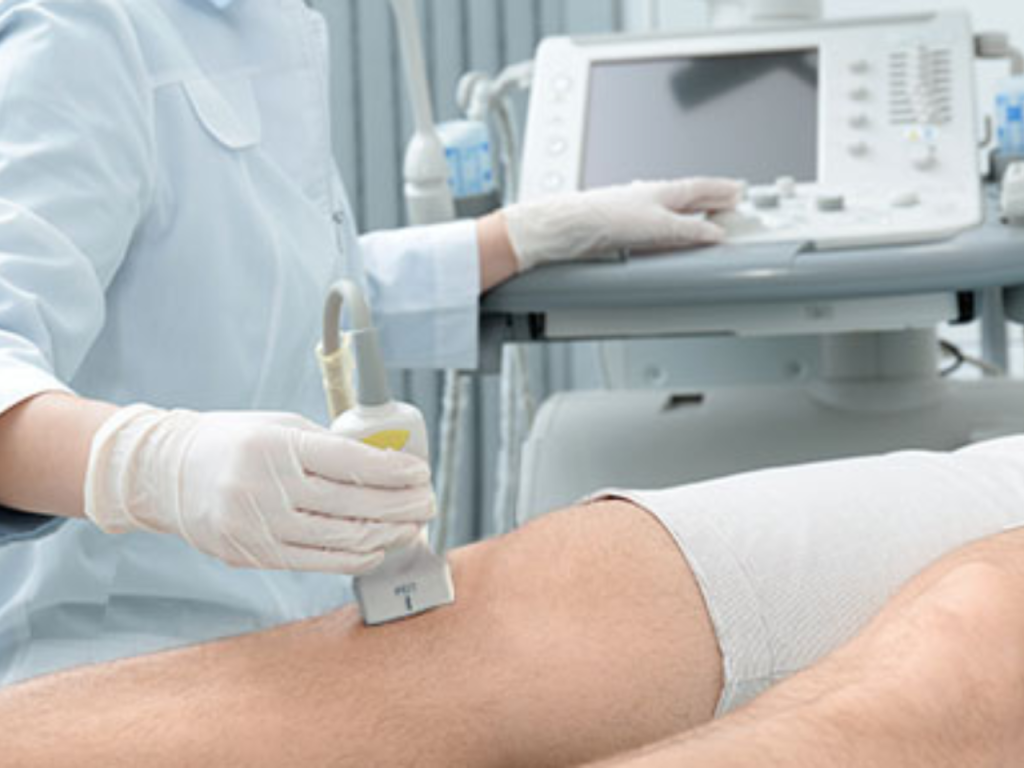
Explore the innovative use of diagnostic ultrasound in musculoskeletal care. Discover how this technology enables doctors to swiftly and accurately diagnose issues in ligaments, tendons, and joints, leading to improved treatment outcomes. Learn why ultrasound offers advantages over MRI, providing real-time insights, dynamic imaging, and the ability to compare affected areas with healthy ones.
A doctor can use diagnostic ultrasound machines in his/her office to almost immediately see what’s going on in painful ligaments, tendons, and joints. This advancement not only improves diagnosis; ultrasound guidance can also help the doctor accurately place injections, improving results. Ultrasound diagnosis for musculoskeletal complaints has an advantage over MRI for several reasons. First, it can provide current, real-time, information about a patient’s problem. It be performed in an office setting where the doctor can immediately and precisely examine the site of injury or pain. Also, while MRI is done with the joint motionless, some connective tissue tears do not show up completely, or at all, unless the joint is moving.
Ultrasound is able to image joints “dynamically”—i.e., with movement—to see what happens to the tissue or joint. Ultrasound can also detect fluid in a joint and provide precise needle guidance in draining that fluid, or injection guidance for specific injury sites. Ultrasound can also offer a comparison between both sides of a patient—for instance, a patient’s injured right knee and healthy left knee. Such differences are often very helpful in diagnosis, but seldom would a doctor order an MRI of the “good” side. Also of benefit is the ability to compare different ultrasound scans over a course of treatment in order to assess progress over time. And, finally, ultrasound can be performed on any patient, including one who has metal in a joint—something that is not always possible with MRI, since magnetic resonance imaging machines use magnets, and may not be safe for some patients.
Explore the roots of Prolotherapy in hernia sclerotherapy, a nonsurgical technique that stimulated tissue repair and revolutionized hernia treatment. Join us as we delve into the early days of Prolotherapy and its evolution into a widely accepted practice for addressing musculoskeletal issues.
Explore the innovative use of diagnostic ultrasound in musculoskeletal care. Discover how this technology enables doctors to swiftly and accurately diagnose issues in ligaments, tendons, and joints, leading to improved treatment outcomes. Learn why ultrasound offers advantages over MRI, providing real-time insights, dynamic imaging, and the ability to compare affected areas with healthy ones.
All Comments